Standing water in a Garland home or business
Water Extraction Garland TX: Fast Removal Of Standing Water
If you need water extraction Garland TX, time matters more than anything else. Each hour the water sits, it soaks deeper into carpet pad, drywall and the wood under your floor. Tell us what happened and we put you in touch with a local crew that pumps the water out and sets up the drying.
- Carpet, tile, vinyl and wood floors
- Clean, grey and black water
- Homes, rentals and businesses
- Real cost figures on this page
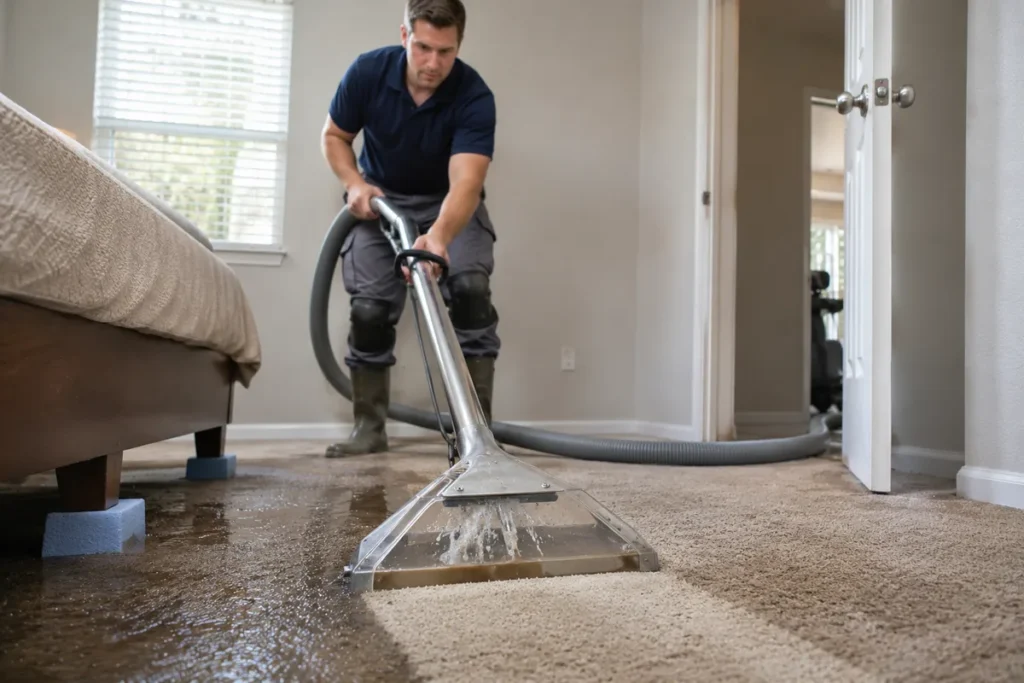
What To Do Before The Crew Arrives
These five steps cost nothing and limit the damage while help is on the way.
- Stop the source.Close the main shutoff valve, or the small valve behind the toilet, sink or washing machine that is leaking.
- Cut the power to wet rooms.Switch off the breakers for those rooms. Do not step into water to reach the panel.
- Stay out of dirty water.Water from a drain, a toilet or the street carries germs. Keep children and pets away from it.
- Take photos first.Shoot every wet room and the source of the leak before anything is moved. Your insurer will ask for them.
- Lift what you can.Move rugs, boxes and small furniture to a dry room, and put foil or plastic under the legs of heavy pieces.
Safety steps follow guidance from the US EPA, Mold Information.
Water Extraction Garland TX: What The Service Covers
Extraction is the first working stage of any water job. It removes the liquid water so that drying can begin.
- Standing water pumped out of rooms, garages and crawl spaces
- Water pulled from carpet and the pad under it
- Water trapped under tile, vinyl plank and wood floors
- Wet furniture and boxes moved and blocked up
- Moisture readings on walls, floors and cabinets
- A written record of what was wet and how far it spread
Once the liquid water is gone, the job moves to structural drying, where air movers and dehumidifiers take out what has soaked into the building.
How Water Extraction Works, Step By Step
A careful crew works in this order. If someone skips the first two steps, ask why.
- Check safety and the water type.The crew confirms the power is off and works out whether the water is clean, grey or black. That decides what can be saved.
- Find how far the water went.Water runs under walls and into the next room. Meters show the true edge of the wet area, which is usually wider than the puddle.
- Pump out deep water.Anything more than an inch or so is removed with a submersible pump and a hose run to a drain or outside.
- Extract floors and carpet.A truck mounted or portable extractor pulls water from carpet, pad and hard floors, pass after pass, until little comes up.
- Read moisture and hand over to drying.Final readings are written down. They become the starting point for the drying plan and for your claim.
Equipment A Crew Uses To Pull Water Out
A household wet vacuum holds a few gallons. Professional machines move far more water and reach places you cannot.
| Tool | What it does | Where it is used |
|---|---|---|
| Submersible pump | Moves deep standing water through a hose | Flooded rooms, garages, crawl spaces |
| Truck mounted extractor | Strong vacuum powered from the van | Whole floors of wet carpet |
| Portable extractor | Smaller vacuum unit carried inside | Upper floors, apartments, tight rooms |
| Weighted extraction tool | Presses water out of carpet and pad | Carpet that will stay in place |
| Moisture meter | Measures water inside materials | Drywall, baseboards, subfloor |
| Thermal camera | Shows cool, wet patches behind surfaces | Walls and ceilings with no visible stain |
How Long Water Extraction Takes
Extraction is the quick part of the job. One room with shallow water is often cleared in a couple of hours. A whole ground floor, or a room with deep water, can take most of a day.
Drying is the slow part. After the water is out, equipment usually runs for several days before the readings come back normal. Ask the crew for a written estimate of both stages before work starts, because every house is different.
What Water Extraction Costs In Garland
These are national figures, so treat them as a guide. Your quote depends on the size of the wet area and the type of water.
| Item | Typical cost |
|---|---|
| Clean water, per square foot | $3.50 |
| Grey water, per square foot | $5.25 |
| Black water, per square foot | $7.50 |
| Smallest to largest jobs | $450 to $16,000 |
| Average full restoration job | $3,866 |
Removing the water is only one line on the bill. Drying, cleaning and repairs are priced on top. For a room by room breakdown, see the Garland cost guide.
Can Wet Carpet And Pad Be Saved?
It depends on two things: where the water came from and how long it sat.
Often Saved
- Carpet soaked by a clean supply line, reached within a day or two
- Tile and sealed concrete floors
- Solid wood furniture that is dried quickly
Usually Replaced
- Carpet pad, which holds water like a sponge
- Any carpet soaked by sewage or flood water
- Swollen laminate and particle board
Water categories and what they mean for materials come from the IICRC, ANSI/IICRC S500 Standard.
Why A Shop Vacuum Is Not Enough
A wet vacuum is fine for a small spill on a hard floor. It does not reach the water in the carpet pad, under the baseboards or inside the bottom of the wall. That hidden water is what leads to swollen floors and mold a week later.
The EPA says wet materials should be dried within 24 to 48 hours to prevent mold growth. If more than one room is wet, or the water came from a drain, get a crew in. Mold that has already started is covered on our mold removal page.
Where Garland Homes Usually Take On Water
Most requests we see fall into three groups. The first is a failed supply line, water heater or washing machine hose. The second is a pipe that split in a freeze, which is covered on our burst pipe cleanup page. The third is storm water.
City of Garland engineers say most of the city’s flooding problems are in the Duck Creek basin, where homes were built along the creek in the 1950s and 1960s. If rain or creek water came in, read the flood cleanup page, because that water is treated differently.
Will Insurance Pay For Water Extraction?
Often yes, when the cause is sudden. The Texas Department of Insurance says most homeowners policies cover sudden and accidental water damage, such as a burst pipe. Slow leaks and outside flooding are usually not covered by a standard policy.
Call your agent early and keep every photo and receipt. The paperwork is explained in the insurance claim guide.
Source: Texas Department of Insurance, Homeowners Insurance FAQ.
Areas We Cover In Garland
We take requests from every Garland ZIP code, 75040 to 75044.
Water Extraction Garland TX Questions And Answers
How soon should water be removed?
As soon as it is safe. The EPA advises drying wet materials within 24 to 48 hours to prevent mold, and extraction has to happen before drying can start.
Is water extraction the same as water damage restoration?
No. Extraction removes the liquid water. Restoration is the whole job, which also includes drying, cleaning and repairs. The full process is on our water damage restoration page.
Can water be removed from under a wood floor?
Sometimes. Crews use floor mats that pull water up through the boards. It works best when started early and when the water was clean.
Do I have to leave the house during extraction?
Usually not for clean water in one or two rooms. For sewage or a large flood, the crew may ask you to stay out of the affected area.
Are you the company that does the work?
No. Fix Water Damage Garland TX is a referral service. We pass your details to an independent local restoration crew, and that crew quotes, does the work and bills you or your insurer directly.
Send Us The Details
Write what happened, where in Garland, and when it started. A short message is enough to get things moving.
Our message line is being connected. Please check this page again soon.